
Cable Cars & funiculars
Cable Cars & funiculars
Contents
- Contents
- Key Takeaways
- Cable Cars in Barcelona
- Montjuic Cable Car (Telefèric de Montjuïc)
- Port Cable Car (Transbordador Aeri del Port)
- Montserrat Cable Car (Aeri de Montserrat)
- Barcelona Funiculars
- Montjuic Funicular
- Tibidabo Funicular
- Montserrat Rack Railway (Cremallera de Montserrat)
- Tips & Practical Info for Barcelona Cable Cars
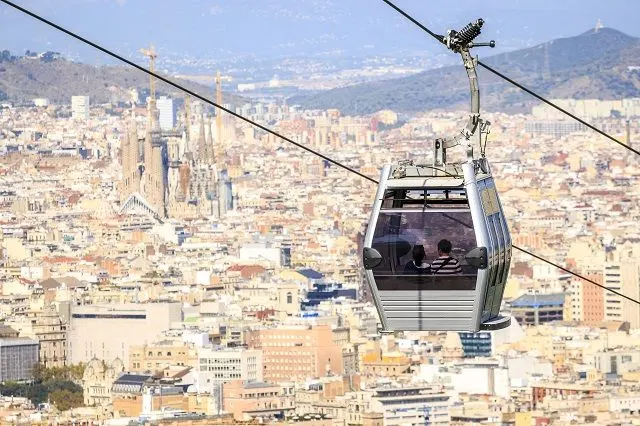
Barcelona has three cable cars and three funiculars — and between them, they connect the city's beaches, mountains, and hilltop parks in a way no bus or metro can match. Some are purely practical. Some are tourist attractions in their own right. This guide covers all of them: what they are, where they go, how much they cost, and the one practical catch you need to know before you show up.
Prices are correct as of 2026 — always verify before visiting, as fares change seasonally.
Contents
Key Takeaways
- The Montjuic funicular is free with a regular metro ticket — no extra fare needed.
- The Tibidabo funicular only runs when the park is open — check dates before going.
- The Port Cable Car runs from Barceloneta beach to the slopes of Montjuic — great views, but pricey for what it is.
- The Montserrat cable car and rack railway are two separate options for reaching the same monastery — the rack railway (FGC from Plaça Espanya) is usually the easier choice.
- Book Montjuic Cable Car tickets online in advance during summer — queues can be long.
Cable Cars in Barcelona
Montjuic Cable Car (Telefèric de Montjuïc)
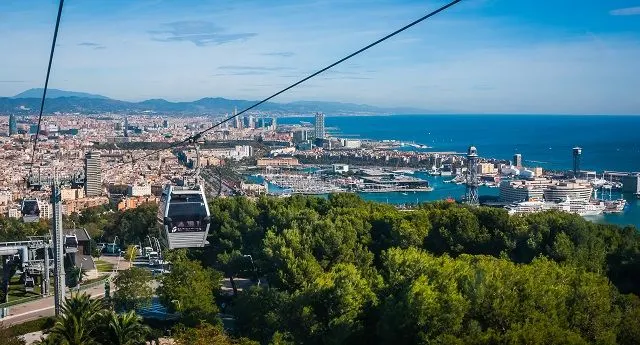
The Montjuic cable car is the one most visitors are thinking of when they picture Barcelona cable cars. It runs from the Parc de Montjuïc station — reachable via the Montjuic funicular — all the way to the Castell de Montjuïc at the top. On a clear day, the views stretch across the port, the sea, and the entire city below.
The ride takes around 10 minutes and has an intermediate stop at Mirador station, where you can get off to enjoy a viewpoint terrace before continuing to the castle. You can ride one-way or buy a return ticket.
Tickets (2026): Adult return around €13.50 · One-way around €9.50. Children under 4 travel free. Verify current prices on the official TMB website before visiting.
How to get there: Take metro line 2 or 3 to Paral·lel, then ride the Montjuic funicular (included in your metro ticket) up to Parc de Montjuïc station. The cable car departs from there.
Hours: Roughly 10:00–19:00 (winter) to 10:00–21:00 (summer), closed on some public holidays. Check the official schedule — it does close for maintenance periods.
For more on what to do once you're up there, read our full guide to Montjuic Barcelona — castle, gardens, Olympic venues and all.
Get Tickets for the Montjuic Cable Car
Port Cable Car (Transbordador Aeri del Port)
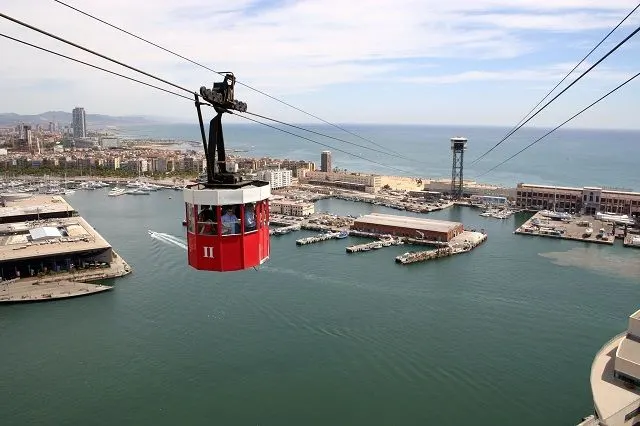
The Port Cable Car is Barcelona's oldest aerial tramway — and its most dramatic. It runs across the harbour from the Torre de Sant Sebastià tower in Barceloneta, over the water to the Jaume I tower in the middle of the port, and then continues to the Miramar station on the lower slopes of Montjuic. The whole crossing takes about 10 minutes.
The views over Barceloneta beach, the marina, and the cruise terminal are genuinely spectacular — there's nothing quite like it in the city. But be honest with yourself: it's expensive for what it is, and it doesn't take you to the top of Montjuic (you'd still need the cable car or a walk from Miramar). Many people ride it once for the experience and skip it on the way back.
Tickets (2026): Adult return around €34 · One-way around €22. No metro or transport pass discounts apply. Verify current prices on the official website before visiting.
How to get there (Barceloneta end): Walk to the end of Passeig Joan de Borbó — the Torre de Sant Sebastià is right there at the harbour. Or take the metro to Barceloneta (L4) and walk about 10 minutes.
Hours: Approximately 11:00–19:00 (low season) to 11:00–20:00 (summer). Subject to wind closures — high winds will ground it with no notice.
Get Tickets for the Port Cable Car
Montserrat Cable Car (Aeri de Montserrat)
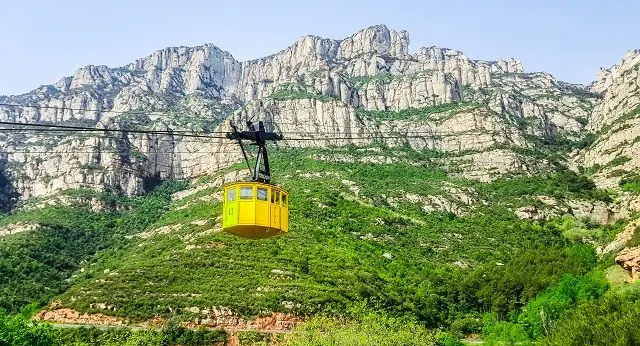
If you're heading to Montserrat, the cable car is one of two ways to get from the valley floor up to the monastery. The Aeri de Montserrat departs from Aeri de Montserrat station on the R5 FGC line — a different station from the one used by the rack railway (see below). The cable car takes about five minutes and rises steeply through the rock formations. It's a smaller gondola and can feel quite exposed — exhilarating for most people, less fun if you're nervous about heights.
This option tends to feel a bit more adventurous than the rack railway, and the approach gives you a different view of the mountain. That said, if you have a large group or heavy luggage, the rack railway is usually easier.
How to get there: Take the FGC R5 line from Plaça Espanya (Barcelona) toward Manresa and get off at Aeri de Montserrat station. Journey time: about 1 hour from Barcelona.
Tickets: Usually included in combo packages from Barcelona. You can also buy individual cable car tickets on arrival, but the combined train + cable car ticket (Trans Montserrat or Tot Montserrat pass) is almost always better value. Check current prices on the FGC website before visiting.
Book a guided tour to Montserrat with transport included
Barcelona Funiculars
Montjuic Funicular
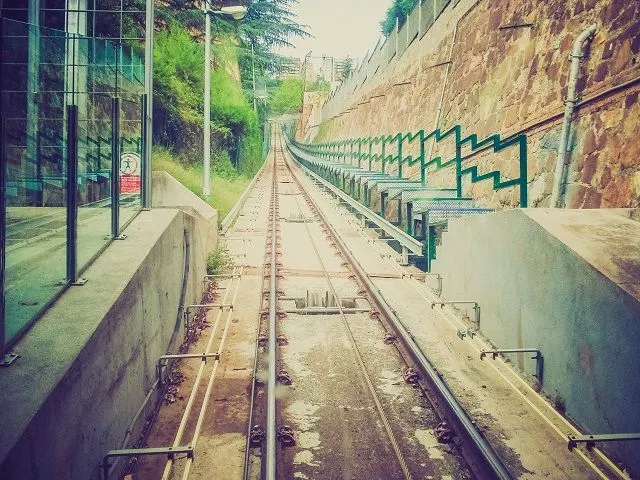
The Montjuic funicular is the easiest — and cheapest — way to start climbing Montjuic. It departs from Paral·lel metro station (lines L2 and L3) and reaches Parc de Montjuïc station in just two minutes. From there, you can walk to the Joan Miró Foundation, the Olympic Park, or continue up by cable car to the castle.
The best part: there is no extra charge. The Montjuic funicular is integrated into the Barcelona metro network and works with the same T-Casual card or any other valid metro/transport pass. If you're already using public transport to get around, it's effectively free.
At the time of its opening in 1928, it was reportedly the fastest funicular of its kind in the world — able to move around 6,000 passengers per hour up the mountain. These days it's a bit more modest, but still impressively quick.
Hours: Operates daily, broadly in line with metro hours. Extended hours in summer and on weekends. Check TMB for the current schedule.
Tibidabo Funicular
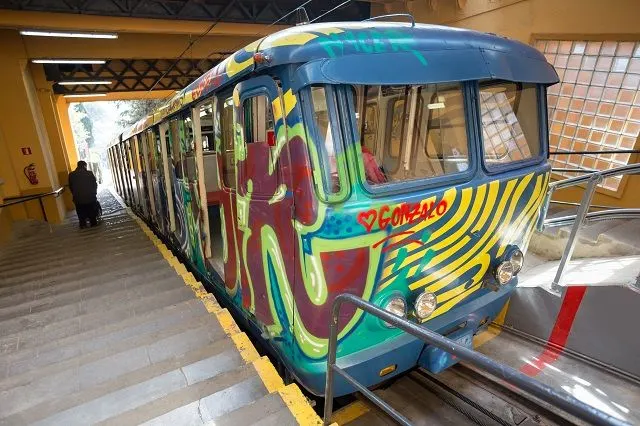
The Tibidabo funicular is one of the oldest in the world — it opened in 1901 and still runs today. It departs from Plaça del Doctor Andreu (at the top of Avinguda del Tibidabo) and climbs directly to the summit of Tibidabo mountain, where you'll find the amusement park, the Sagrat Cor church, and some of the best panoramic views in the entire city.
Critical practical note: the Tibidabo funicular only operates on days when the Tibidabo Amusement Park is open. The park doesn't run year-round — it has reduced hours in winter and some weekdays. If you turn up on a day the park is closed, the funicular won't be running. Always check the official Tibidabo website for current operating days before making the trip.
How to get to Plaça del Doctor Andreu: Take the FGC train from Plaça Catalunya to Avinguda del Tibidabo station, then board the Tramvia Blau (historic blue tram) or Bus T2C to reach the funicular base. The blue tram is a charming way to go but runs limited hours — check ahead.
Funicular ticket: Included in the Tibidabo park admission. There is no separate funicular-only ticket.
Montserrat Rack Railway (Cremallera de Montserrat)
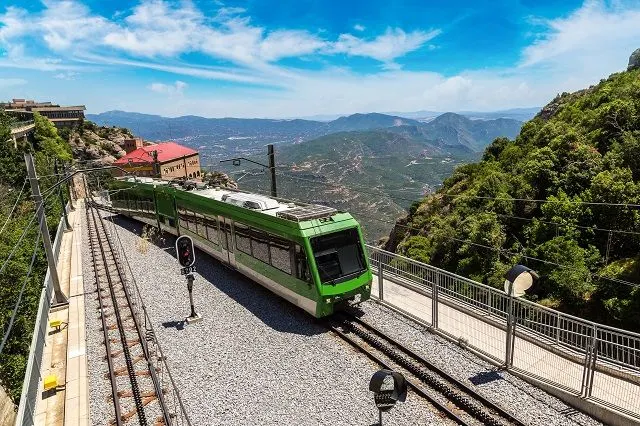
The rack railway — known locally as the cremallera — is the most popular way to reach Montserrat. It departs from Monistrol de Montserrat station on the FGC R5 line (a different stop from the cable car), and the journey up takes about 15 minutes. The carriages are modern, comfortable, and can handle larger groups easily — which is why most tour groups and families use this option over the cable car.
The views from the rack railway are different from the cable car — you're inside a train climbing through the mountain base rather than swinging in a gondola above it. Less vertigo-inducing, but arguably less dramatic.
How to get there: FGC R5 from Plaça Espanya to Monistrol de Montserrat station (about 1 hour), then board the rack railway. The Trans Montserrat and Tot Montserrat passes cover both the FGC train and the cremallera in a single ticket — worth it for most visitors. Check current prices on the FGC website.
If you're planning a half-day or full-day trip from Barcelona, read our guide to the best day trips from Barcelona — Montserrat is one of the top picks, and we cover how to fit it into your itinerary.
Book a Tour to Montserrat with transport from Barcelona
Tips & Practical Info for Barcelona Cable Cars
Book the Montjuic Cable Car online in summer. Walk-up queues can be long in July and August. Booking online costs the same and saves real time.
Check the wind forecast for the Port Cable Car. It closes in high winds without notice — if there's a Tramontane blowing, have a backup plan.
Use your metro ticket for the Montjuic funicular. Don't buy a separate ticket — the T-Casual (10-trip card) or any integrated transport pass covers it. Arriving via Paral·lel metro makes the most sense.
For Tibidabo, always check the park calendar first. The funicular is tied to the park's operating days. Mid-week in winter the park is often closed.
Combine Montjuic cable car + funicular in one trip. Metro to Paral·lel → funicular to Parc de Montjuïc → cable car to the castle → walk down through the gardens. This is the classic route and it works well.
For Montserrat, buy a combo pass. The Trans Montserrat pass (FGC train + rack railway or cable car) is almost always cheaper than buying each ticket separately. Check the FGC website for the current version and pricing.