
Barcelona Bus
Barcelona Bus
Contents
- Hola Barcelona Transport Card
- Barcelona bus maps — over 100 lines, one logical grid
- Understanding the bus line prefixes
- How to pay and validate your ticket
- Tickets & prices for 2026
- Hola BCN Transport Pass
- Hola Barcelona Transport Card
- Night bus in Barcelona (Nitbus)
- Practical tips for using the Barcelona bus
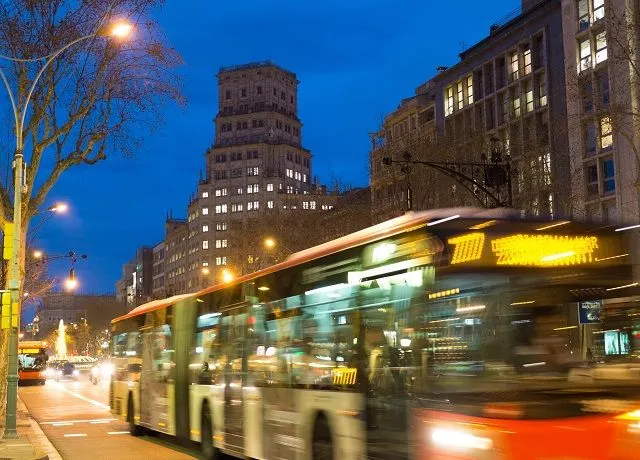
After the metro, the bus is one of the most popular transportation options in Barcelona. Depending on where you're headed, it can actually be faster and more direct — especially for cross-town trips the metro doesn't cover well.
Table of Contents
1. Barcelona Bus Maps
2. Understanding the Bus Line Prefixes
3. How to Pay & Validate
4. Tickets & Prices for 2026
5. Hola BCN Transport Pass
6. Night Bus (Nitbus)
7. Practical Tips
Barcelona bus maps — over 100 lines, one logical grid
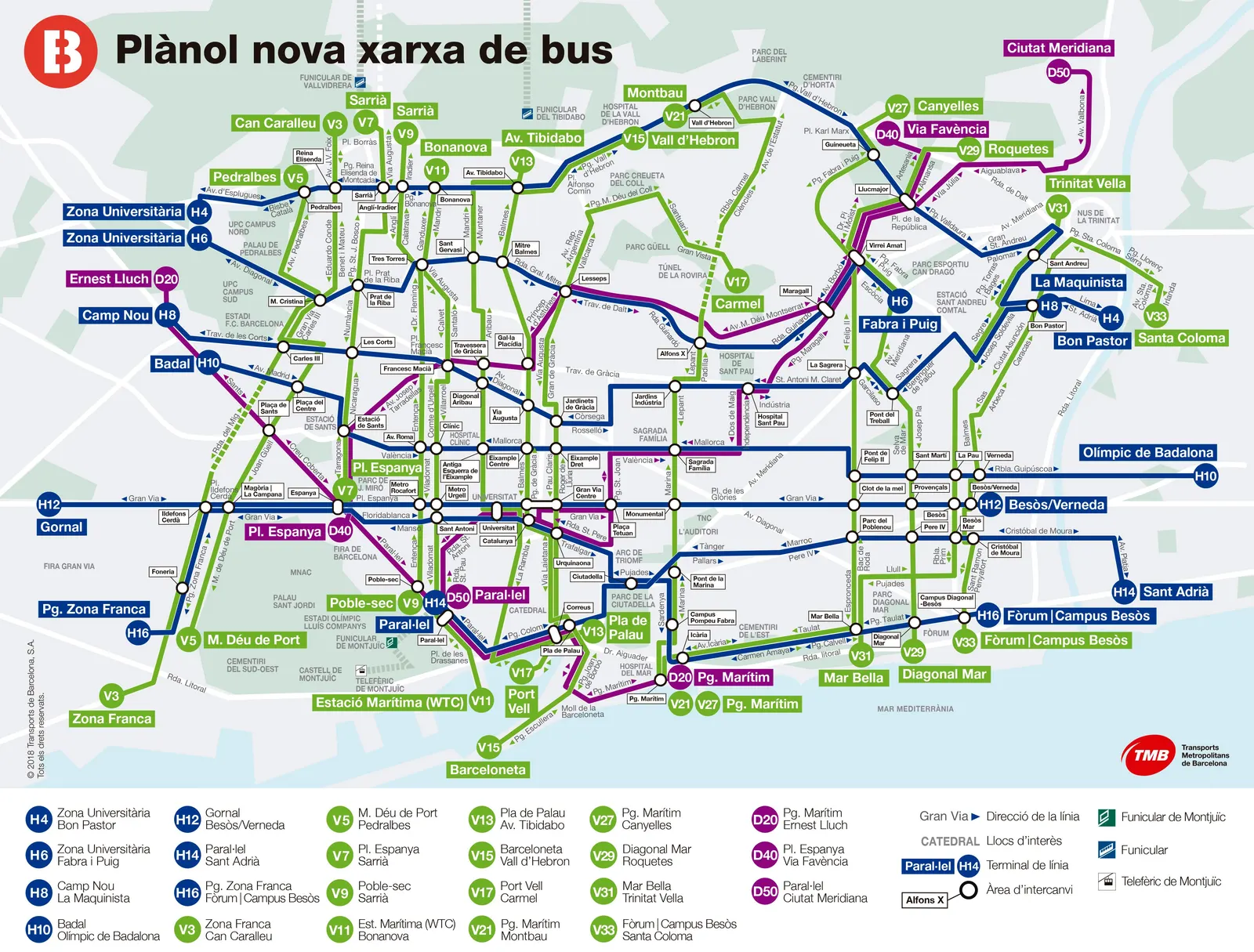
Barcelona's bus network covers every neighborhood in the city with more than 100 lines. The network was redesigned into a logical grid system, which makes it far easier to navigate than the old spaghetti of routes.
The main lines scan the city in three directions: vertical, horizontal, and diagonal. This grid design was built specifically to connect smoothly with the Metro and the Tram at key interchange stops.
Click on the image to enlarge
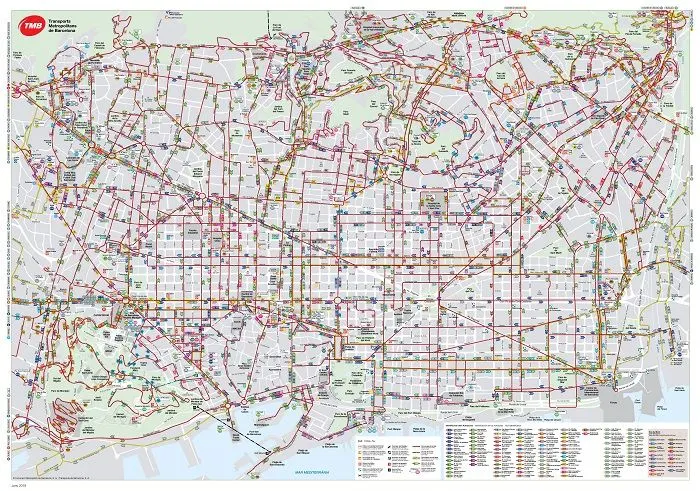
In addition to the grid lines, there is a set of secondary bus lines with a regular number scheme that cover the remaining areas of the city not served by the main grid. These are the lines you'll often need to reach quieter residential zones.
Click on the image to enlarge
Understanding the bus line prefixes
Every bus line in Barcelona carries a letter prefix that tells you exactly what kind of route it is. Once you know the system, reading any bus stop map becomes straightforward.
- H (Horizontal) — Lines that run east–west across the city. H6, H8, H10, H12, H14, H16.
- V (Vertical) — Lines that run north–south. V7, V11, V13, V15, V17, V19, V21, V23, V27.
- D (Diagonal) — Lines that run diagonally, connecting the upper and lower parts of the city. D20, D40, D50.
- N (Night / Nitbus) — Night bus lines operating when the metro is closed (see below).
- Numbers only — Secondary lines covering residential and outer areas not on the main grid.
If you want unlimited free access to the Barcelona transportation system plus discounts on top attractions, check the Barcelona Card — one of the city's most practical tourist passes.
How to pay and validate your ticket
Payment on Barcelona buses is straightforward, but there are a few things worth knowing before you board.
- Board at the front door — always. All other doors are exit-only.
- Validate every time — hold your T-Casual card or contactless card/phone over the yellow reader next to the driver. A beep confirms validation. Transfers are tracked automatically within the 1h15m window.
- Contactless bank cards and mobile wallets (Visa/Mastercard, Apple Pay, Google Pay) are accepted on all buses. Each tap is charged as a single ticket at the single-journey rate. Note: contactless does not give you the multi-ride discount of a T-Casual.
- Cash is not accepted on buses. Buy single tickets in advance at any metro station or tobacco shop (estanc).
- T-Casual and other multi-ride cards are sold at metro stations, TMB service points, and many tobacco shops. They are also available via the TMB app.
Tickets & prices for 2026
All Barcelona bus tickets are integrated with the metro, tram, and FGC Railway — one card covers them all. Prices below are for Zone 1 (the urban area where most visitors stay). Always verify prices before your visit, as fares are reviewed annually.
Hola BCN Transport Pass
The Hola BCN pass gives you unlimited access to the entire Barcelona transport network for a fixed number of hours: 48h, 72h, 96h, or 120h. It covers metro, buses, tram, FGC Railway, and Renfe suburban trains — all in one card.
Unlike the T-Day, the Hola BCN clock starts from the moment you first validate and runs continuously — so a 72h pass gives you a full three days of travel regardless of when your trip starts. It's the most convenient option if you're visiting Barcelona for a long weekend and plan to move around a lot.
Night bus in Barcelona (Nitbus)
When the metro closes — usually around midnight Sunday to Thursday, and around 2am on Fridays — the Nitbus network takes over. These are the N-prefix lines, and they run until roughly 5–6am.
There are around 17 Nitbus lines, and every single one passes through Plaça de Catalunya. That's the hub. If you're ever unsure where to catch a night bus back, make your way to Plaça Catalunya and you'll find a connection.
- Operating hours: approximately 22:20 to 06:00
- Frequency: every 20–30 minutes, depending on the line and time of night
- Payment: same tickets as daytime — T-Casual, single ticket, or contactless. No extra charge.
- Hub: all lines pass through Plaça de Catalunya
- On Friday and Saturday nights, some lines run more frequently to match higher demand
The Nitbus is genuinely useful — Barcelona's nightlife runs late, and taxis get expensive after midnight. Knowing one or two Nitbus lines from where you're staying is worth five minutes of planning.
Practical tips for using the Barcelona bus
A few things that will save you time and confusion on the ground:
- Every bus stop has a full network map plus a specific map of lines serving that stop. Most stops also have digital screens showing real-time arrivals and any service disruptions.
- Use the TMB app (Transports Metropolitans de Barcelona) for real-time bus tracking, journey planning, and digital T-Casual cards. It's free and works well.
- Google Maps works reliably for Barcelona bus routes. It uses live TMB data and is usually accurate to within a minute or two.
- Validate every time you board, even if you're transferring from the metro. The system tracks transfers automatically, but only if you tap at each leg.
- Buses are 100% accessible for people with reduced mobility. All vehicles are low-floor and equipped with ramps and priority spaces.
- The Aerobus is separate from the regular network — it's a private service connecting the airport to Plaça de Catalunya and does not accept standard TMB tickets. If you're arriving by plane, check the dedicated airport transfer options for the best route into the city.
- During peak hours (8–9:30am and 5:30–7:30pm on weekdays), central routes can get busy. The grid lines — H and V — are usually the most crowded.