
Barcelona Tram
Barcelona Tram
Contents
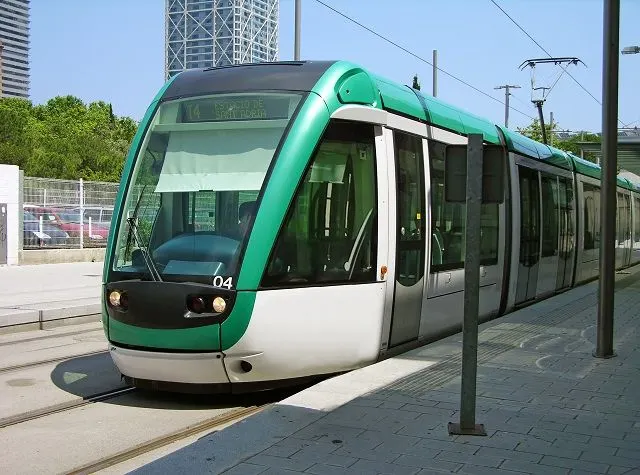
The tram has a surprisingly long history in Barcelona. The first line opened in 1872, and the network grew steadily through the early 20th century. Then, like in many European cities, buses and the metro took over — by the 1970s, trams had disappeared from the streets entirely.
They came back in 2004 with a modern, low-floor network that quickly proved its worth. And in 2024, the two separate tram networks finally merged into one continuous line — the biggest upgrade to Barcelona's tram since its revival.
The Barcelona Tram Network in 2026
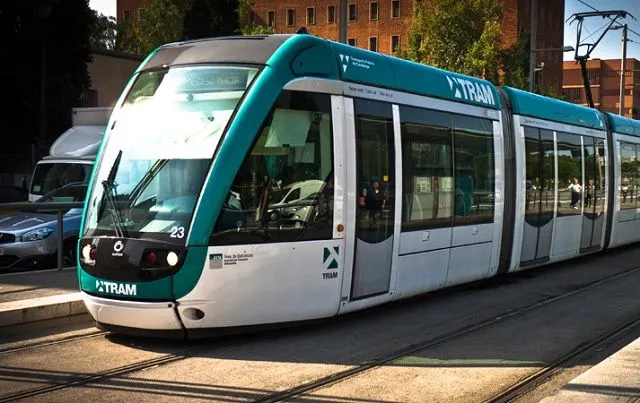
Until 2024, Barcelona had two separate tram systems that didn't connect. That changed when a new central section along Diagonal Avenue was completed, linking the two networks into a single continuous route from one side of the city to the other.
Today the unified network runs from Glòries in the east all the way to Sant Joan Despí and Cornellà de Llobregat in the west, passing through the heart of Diagonal. It's smoother, faster, and finally makes sense as a city-wide route — not just a pair of suburb connectors.
Trambaix — Lines T1, T2 and T3
(Click on the image to enlarge).
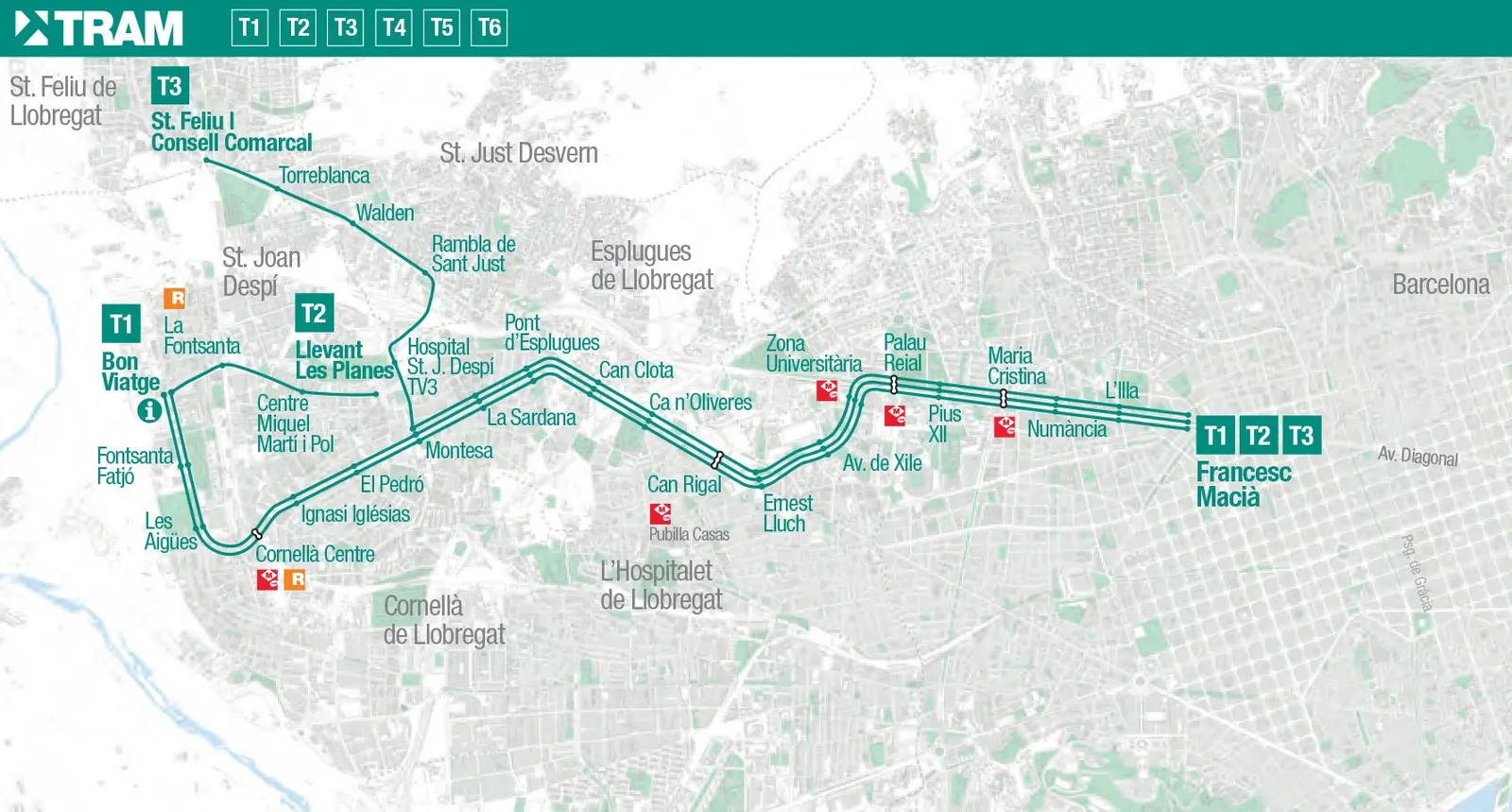
The Trambaix covers the western side of the city, running from Diagonal through Les Corts and into the municipalities of L'Hospitalet, Cornellà, Sant Joan Despí and Baix Llobregat. Lines T1, T2 and T3 fan out from a shared central corridor. It's most useful for reaching areas that the metro doesn't serve directly.
Trambesós — Lines T4, T5 and T6
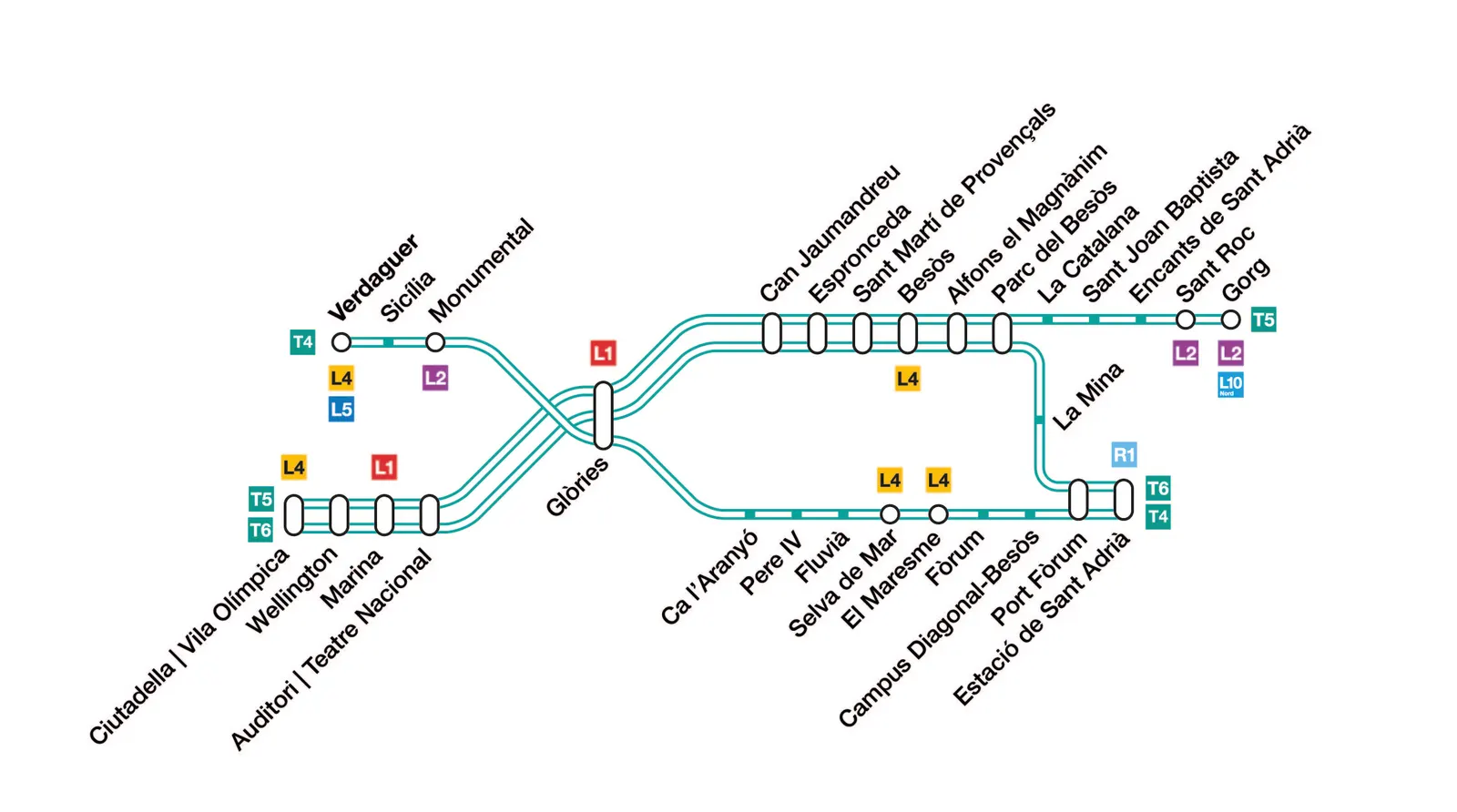
The Trambesós runs along the eastern waterfront, connecting Glòries with the Port Olímpic area, the Fòrum, and continuing into Badalona via lines T4, T5 and T6. It passes close to the Barcelona Zoo and the Barceloneta end of the seafront.
The tram doesn't cover the whole city — it was always designed as a complement to the metro, not a replacement. But the 2024 extension along Diagonal has made it genuinely useful for cross-city journeys that used to require a transfer. The ride is smooth, air-conditioned, and almost always on time.
Tram Tickets & Prices 2026
The tram uses the same integrated ticketing system as the metro, bus, FGC, and Rodalies. You validate the same card or ticket at the tram stop barriers — no separate tram ticket needed. Always verify prices before your visit, as fares are updated periodically by TMB.
Tram stops have automated vending machines that accept credit and debit cards as well as cash. You can also load the T-Casual and other multi-journey cards via the TMB app or at metro station machines.
Is the Tram Worth Using?
For most visitors, the answer is: occasionally yes. The tram serves neighborhoods that the metro misses, particularly along Diagonal and the eastern seafront. If you're staying in or heading to Poblenou, the Forum area, or the western suburbs, it's often the most direct option.
That said, for the main tourist sights — Sagrada Família, Gothic Quarter, Gràcia, Montjuïc — the metro is almost always faster. The tram is pleasant and scenic, but it's not the backbone of getting around. Think of it as one useful piece of a bigger network.
One practical tip: validate your ticket before boarding, at the platform barriers. Unlike buses, you can't pay the driver.
The Blue Tram — Tramvia Blau
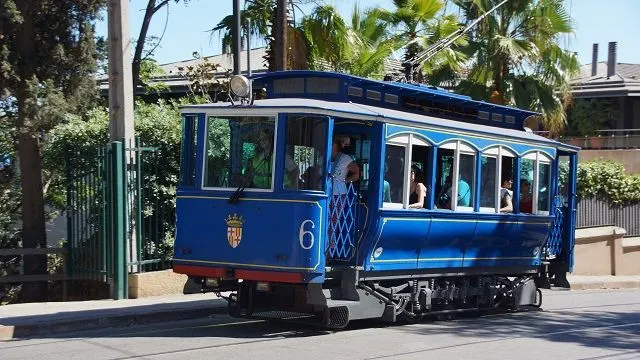
There is one more tram line worth knowing about — and it's nothing like the modern network. The Blue Tram (Tramvia Blau) has been running since 1901, making it one of the oldest working tram lines in Europe.
It runs a short route up Avinguda del Tibidabo, from the FGC station at Peu del Funicular to the bottom of the Tibidabo Funicular. The ride takes about five minutes but it feels like a genuine step back in time — wooden seats, brass fittings, open sides in summer.
It's the traditional way to begin a trip up to Tibidabo mountain. You don't have to take it — there's a bus alternative — but if you're going up anyway, it's worth the extra few minutes.
The Blue Tram runs on a seasonal schedule (typically weekends and public holidays, with daily summer service) and charges a separate fare — it's not included in your regular TMB ticket or Hola BCN pass. Verify current prices and operating days on the TMB website before you go, as the schedule changes seasonally.
Hola BCN Transport Pass
Hola BCN is a transport pass that offers unlimited access to the entire Barcelona transportation network. It covers metro, buses, tram, FGC Railway and Renfe suburban trains, and comes in 2, 3, 4 and 5-day options. A straightforward way to stop worrying about tickets for the duration of your visit.